
Published
The Short Answer
- —Waxing and shaving remove hair at or near the surface, so the follicle keeps producing new hair on its normal schedule, usually within days to a few weeks.
- —Laser hair removal targets the follicle itself with concentrated light energy, reducing its ability to grow hair at all. That is the core difference between the two.
- —A typical laser treatment plan takes four to six sessions spaced weeks apart, because the laser works best on follicles in their active growth phase.
- —Waxing must be repeated indefinitely. Laser hair removal can deliver long-term hair reduction, with occasional maintenance visits for some patients. Results vary.
- —Laser treatment also helps with the side effects of temporary methods: ingrown hairs, razor burn, and the irritation that comes from repeated waxing.
How Each Method Actually Removes Hair
The clearest way to compare laser hair removal vs. waxing is to look at what each one does to the hair follicle, the small structure under your skin that produces every strand of hair. Everything else, from how long results last to how often you rebook, follows from that single difference.
Waxing and Shaving: Surface-Level Removal
Waxing pulls the hair shaft out of the follicle by force. Shaving cuts it off at skin level. In both cases the follicle itself is left fully intact and healthy, which means it goes right back to work. Shaved hair reappears within days. Waxed hair takes longer, usually two to four weeks, because the follicle has to rebuild the shaft from scratch, but it always comes back.
Waxing also has a scheduling catch most people only learn after years of appointments: the hair has to be long enough for the wax to grip before you can be treated again. That means planned stubble weeks between every session, forever.
Laser: Targeting the Follicle Itself
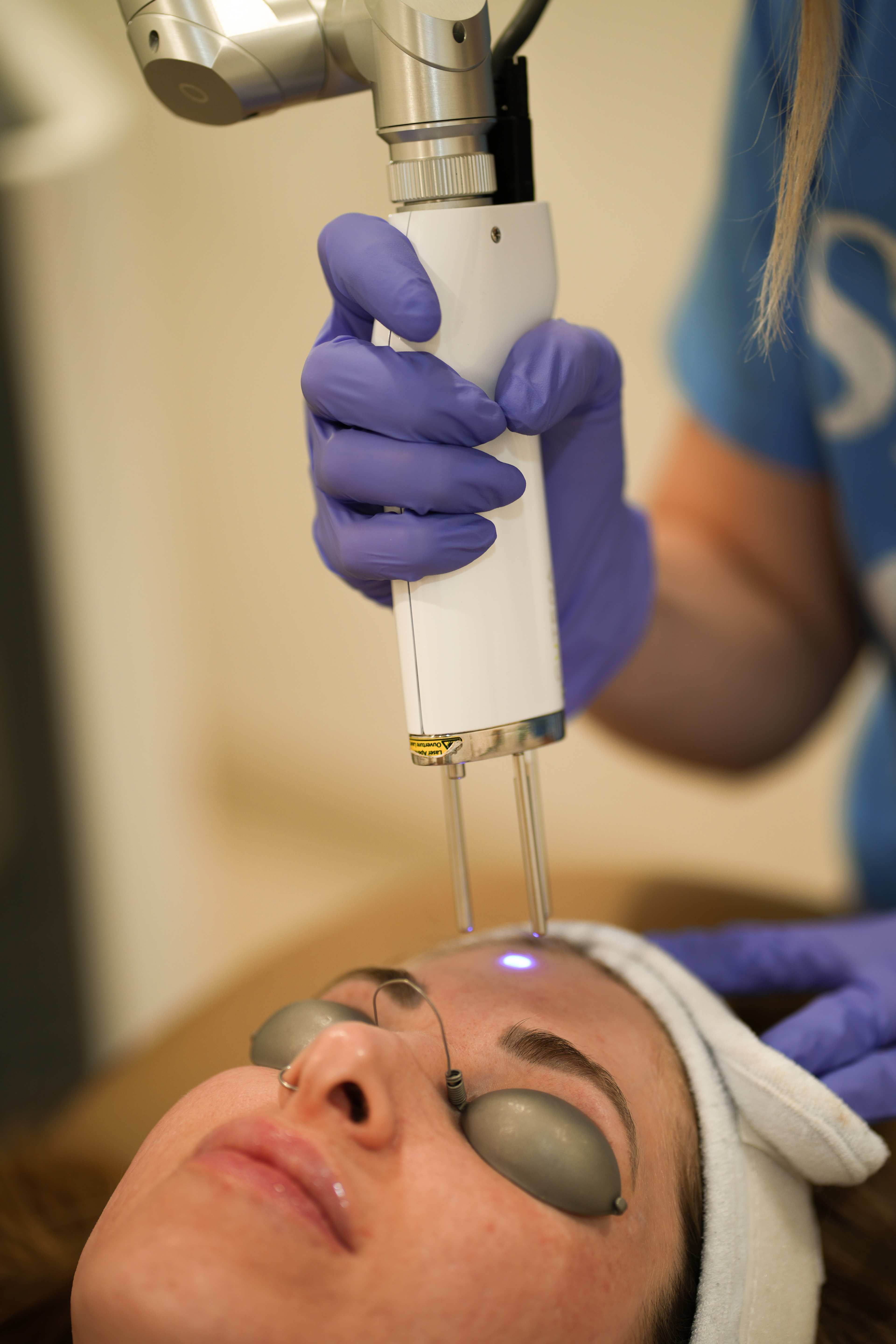
Laser hair removal works differently. The device delivers fast pulses of concentrated light energy that are absorbed by the pigment in the hair shaft. That energy converts to heat inside the follicle, damaging its ability to produce new hair. Hair in the treated area sheds over the following days to weeks, and follicles that absorbed enough energy stop producing hair.
The reason this takes a series of sessions rather than one visit is biology, not upselling. Each hair cycles through growth, transition, and resting phases, and the laser is only effective on follicles in the active growth phase. At any given moment, only a fraction of the hair in an area is in that phase. Sessions spaced several weeks apart catch successive waves of follicles until the area is treated thoroughly.
Laser Hair Removal vs. Waxing, Side by Side
| Waxing | Laser Hair Removal | |
|---|---|---|
| What it does | Pulls hair out; follicle stays intact and regrows the hair. | Heats and damages the follicle so it produces less hair, or none. |
| How long results last | Two to four weeks per session, indefinitely. | Long-term reduction after a full series; occasional touch-ups for some patients. Results vary. |
| Appointments required | Every few weeks, with regrowth required between visits. | Typically 4–6 sessions spaced weeks apart, then maintenance only as needed. |
| Comfort | A sharp tearing sensation across the whole strip, every visit. | Quick warm snaps per pulse, with built-in cooling; sessions are often faster than a wax. |
| Ingrown hairs | Common, since regrowing hair can curl back under the skin. | Reduced over the series, because treated follicles stop pushing out new hair. |
| Between appointments | Hair must be grown out for the wax to grip. | Shave whenever you like; skin can stay smooth between sessions. |
One more practical difference: a waxing habit never ends. Laser hair removal front-loads the effort into a defined series, and then the time you used to spend shaving, booking, growing out, and re-waxing largely goes away. Over months and years, the hours saved are substantial.
Is Laser Hair Removal Permanent?
The accurate phrase is permanent hair reduction, and the distinction matters. Follicles that are fully disabled by treatment do not grow hair again. But your body holds follicles in reserve, and hormonal shifts, from pregnancy to menopause to certain medical conditions, can recruit dormant follicles into production later. That is why some patients are effectively done after their series, while others book an occasional touch-up to stay smooth. Results vary, and a provider who promises you will never see another hair is overpromising. At Aesthetic Collective we set that expectation up front, because patients who know how the biology works are consistently the happiest with their results.
Compare that honestly to waxing, where permanence is not even on the table. Every wax buys you a few weeks. A laser series changes what your follicles are capable of producing. For most people weighing the two, that is the deciding factor.
What About Ingrown Hairs and Razor Burn?
If you deal with ingrown hairs, bumps along the bikini line, or razor burn on your neck or underarms, this comparison tilts even further. Ingrown hairs happen when a regrowing hair curls back and grows under the skin instead of through it, and both shaving and waxing create exactly the blunt or broken regrowth that causes them. Laser hair removal can help break that cycle at the source: follicles that no longer produce hair cannot produce ingrown hair. Many patients notice fewer bumps and less irritation within the first few sessions, though skin response differs from person to person.
Laser Hair Removal in West Des Moines: What to Expect
At Aesthetic Collective in West Des Moines, laser hair removal starts with a consultation, not a laser. Our ICU-trained nurses evaluate your skin tone, hair color and texture, and the areas you want treated, then build a session plan around your goals. Treatment itself is quicker than most people expect: underarms take minutes, and even larger areas like legs or back are efficient because each pulse treats a patch of follicles at once.
We treat the areas people actually ask about: underarms, legs, bikini line, face, back, and chest. You can read more about the treatment on our laser hair removal page, or browse the full lineup of laser treatments in West Des Moines if your goals include skin tone and texture as well as hair.
Patients visit us from across the metro, including Waukee, and the most common thing we hear after a first session is that they wish they had stopped waxing sooner. If you are comparing providers, our guide to choosing a med spa in West Des Moines covers the credential and safety questions worth asking anywhere you go.
Frequently Asked Questions
How many laser hair removal sessions will I need?
Most treatment plans run four to six sessions spaced several weeks apart, because the laser only affects follicles in their active growth phase and your hair cycles through that phase in waves. Dense or hormonally driven hair can take more visits, and results vary from person to person, which is why we map out a plan at your consultation rather than quoting a universal number.
Does laser hair removal hurt more than waxing?
Most patients say it hurts less. Waxing rips the full hair shaft out of the follicle across a whole strip of skin at once. A laser pulse feels like a quick snap or warm pinch that fades almost immediately, and modern cooling built into the handpiece takes the edge off. Sensitive areas like the bikini line feel sharper than legs or underarms with either method.
Is laser hair removal permanent?
The honest term is long-term hair reduction. Treated follicles that are destroyed don't grow hair again, but your body can activate dormant follicles over time, especially with hormonal changes. Many patients maintain smooth results with an occasional touch-up visit after their initial series. Results vary with hair color, skin tone, and the area treated.
Can I wax between laser sessions?
No, and this surprises a lot of people. The laser targets pigment in the hair shaft and follicle, so waxing or plucking between sessions removes the very thing the laser needs to work. Shaving is the right choice between appointments: it clears surface hair while leaving the follicle intact for your next treatment.
Does laser hair removal work on all skin tones?
Modern laser platforms have settings designed for a much wider range of skin tones than early devices did, and the best starting point is a consultation where your provider assesses your skin and hair contrast in person. The classic ideal candidate is darker hair against lighter skin, but treatment plans can be adjusted for many combinations.
The Bottom Line
Waxing is a subscription: it works, but only for as long as you keep paying for it in appointments, regrowth weeks, and irritated skin. Laser hair removal is an investment in changing what the follicle does, with long-term reduction that temporary methods cannot match. If smooth, low-maintenance skin is the goal, laser is the method built to get you there.
Book a free consultationwith Aesthetic Collective and we’ll assess your skin and hair in person, answer the questions an article can’t, and build a laser hair removal plan that fits your timeline.